Advanced Dry Fly Fishing Masterclass: Precision Control, Mending, and Complex Current Strategies
Dry fly fishing is widely considered the ultimate pursuit for anglers, offering the unmatched visual thrill of a surface strike combined with demanding technical requirements. Drawing from the expert field insights shared by Red's Fly Shop, this guide breaks down the core tactics needed to master dry fly fishing in wild, technical rivers—covering presentation, mending, complex current management, and advanced casting.

1. The Core Philosophy: Why Drag-Free Drift is Paramount
The fundamental rule of dry fly fishing is the drag-free drift. Once your fly lands on the water, it must drift downstream completely unhindered, acting precisely like a natural, helpless insect.
- Avoiding the V-Wake: Any unnatural tension on the line that carves a visible "V-wake" on the surface is a dealbreaker. In heavily pressured trout streams, fish quickly learn that bugs making V-wakes bite back, instantly rejecting artificials that behave this way.
- Long-Distance Positioning: In crystal-clear water, your shadow and fly line will easily spook fish. Staying back and executing long, accurate casts allows you to present the fly without alerting your target.
2. Fundamental Mechanics: The Art of Effective Mending
Mending is often treated as a mechanical chore, but it is actually any manipulation of the line designed to promote a natural presentation.
- Loading the Rod Flexibly: Never mend with a dead, stiff stick. Utilize the delicate flexibility of a proper dry fly rod, employing subtle accelerations to adjust the line without disturbing the fly.
-
Elevating the Rod Tip:
- The Golden Rule: Line travels through the air far easier and more delicately than it does through water.
- Keep your rod tip raised at roughly 45 degrees or higher to minimize water drag and maximize touch and sensitivity.
- The Lawn Practice Drill: Cast about 15 feet of line onto the water and practice flicking your wrist just enough to make the line hop left and right in the air while keeping the fly anchored and relatively still on the surface.
3. Advanced Presentation and Line Handling Techniques
Pitch and Twitch (Impact Presentation)
Real terrestrial insects and stoneflies often tumble awkwardly onto the water, creating concentric rings that signal an easy meal to trout.
- Execution: Use a short, aggressive, and hard stop during your cast to make the fly land independently and slightly ahead of the leader.
- Result: The fly hits the water first, sending out natural dinner-bell ripples before the line settles softly behind it.
The Left Reach Cast for Obstructed Lanes
When shoreline brush or complex seams block your direct approach, a standard cast will result in instant drag.
- Execution: Finish your cast by lifting your elbow and sweeping your rod tip sharply to the left, laying down a large left-reach curve.
- Crucial Detail: You must finish with a high rod tip. A low finish causes instant drag, whereas a high stop provides the necessary slack for an immediate, drag-free drift.
The Stop or Parachute Cast (Downstream Presentations)
When braided channels force you to approach trout from directly upstream:
- Deliver a high-stop cast that dumps plenty of slack line into the pool.
- As the fly drifts down, turn your rod tip inward to guide or "skitter" the fly out of the zone smoothly rather than ripping it vertically off the water over the fish.
Walking the Dog & Skittering in Chaotic Currents
Complex pocket water, eddies, and undertows act like vacuum cleaners, grabbing your leader and dragging your fly underwater.
- Physical Line Management: You must actively lift and manipulate the fly and leader on the surface through subtle twitching to keep them afloat.
- Disguising Bad Drifts: When a drift goes messy, don't just give up. Shake your rod tip to make the fly "skitter" or hop, using dynamic motion to mimic a struggling insect and salvage an imperfect presentation.
4. Essential Field Tips
- Use Floatant Liberally: Apply floatant generously to both your leader and fly line. Keeping the entire line high on the surface prevents undertows from drowning your presentation.
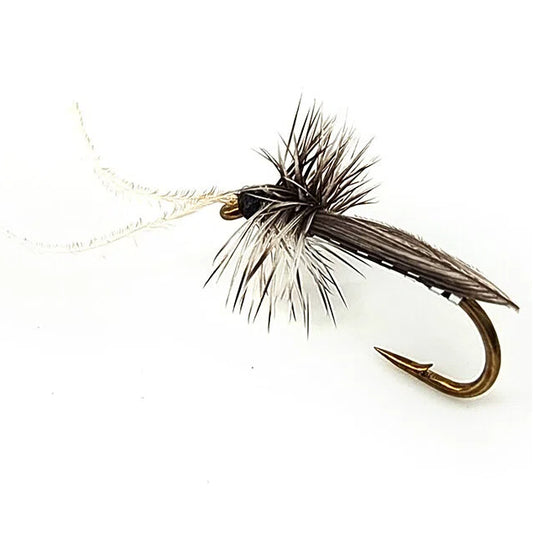
- Downsize When Necessary: If initial patterns (like a large Emma's Golden Stonefly) fail to draw strikes in tricky conditions, switching down to a smaller, more subtle profile (such as a Royal PMX) often turns the day around.
- Mobility is Key: Cover water efficiently. The ability to cast on the move and quickly transition between productive runs is what separates good anglers from great ones.