Articulated Damselfly Nymph: Comprehensive Technical Guide and Fishing Strategy
The damselfly nymph (Coenagrionidae / Calopterygidae) is one of the most prolific, high-protein prey items for freshwater gamefish in stillwaters and slow-moving streams. Unlike stoneflies or caddisflies that scurry along the bottom, damselfly nymphs possess a distinct elongated, segmented body and exhibit a characteristic propulsive swimming motion—an undulating "S-curve" crawl through submerged weed beds.
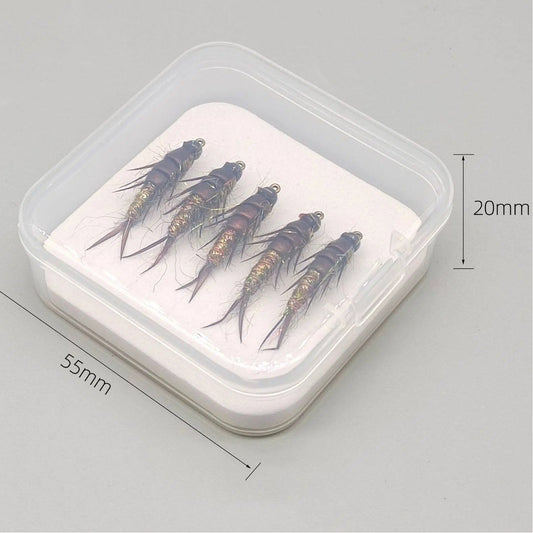
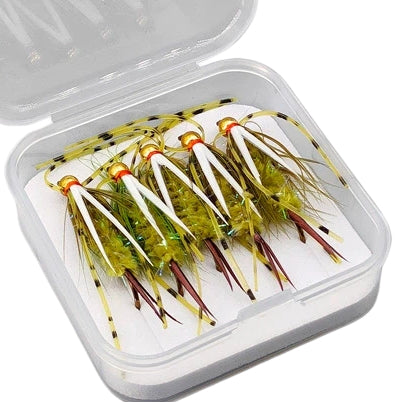
This professional technical guide covers the anatomical design, engineering mechanics, pros and cons, target species, seasonal timing, and tactical presentation methods for this 4-Pack Articulated Damselfly Wet Fly / Nymph.
1. Product Design & Anatomical Mechanics
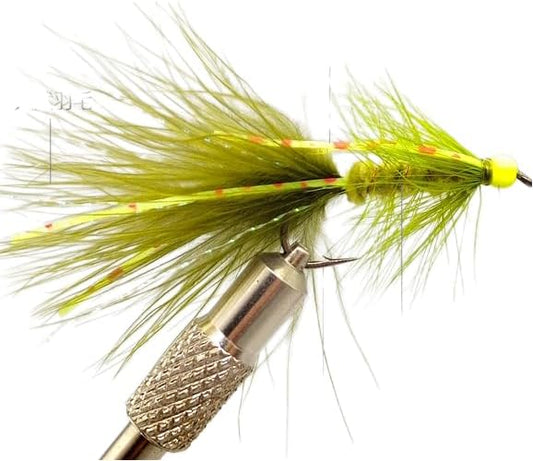
Breaking away from traditional rigid-shank flies, this 4-pack articulated pattern utilizes a multi-component structural design to replicate live invertebrate movement:
-
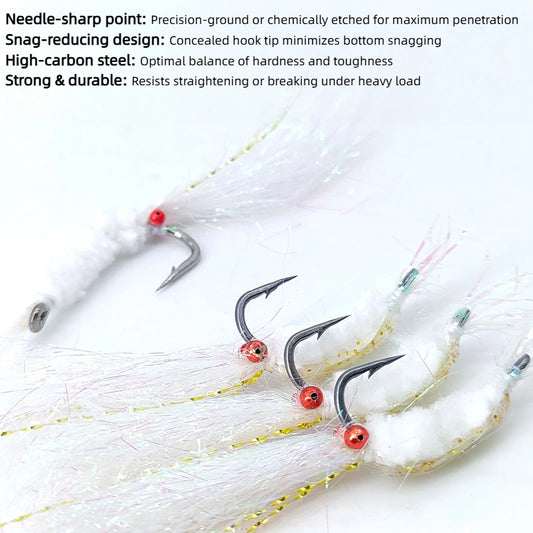
Dual-Hook Articulated System: Connected via a secure transparent linkage system and ultra-fine metal wire reinforcement, the two independent hooks (
Front Hook + Back Hook) allow for extreme articulation. This prevents short strikes—a common frustration with long-bodied nymphs—and gives the body a fluid, life-like hinge action. -
Soft Silicone Feelers & Metal Eyes: The head features realistic metal big eyes paired with soft silicone feelers (
Soft Silicone Feelers) that quiver under micro-currents, triggering instinctive predatory strikes. - Natural Olive Feather Tail: The extended tail utilizes natural olive hackle fibers, offering an ultra-soft profile that breathes and pulses dynamically in the water column even during static pauses.
Product Specifications Table
| Combo Option | Front Hook # | Shank Length (mm) | Hook Gap (mm) | Back Hook # | Shank Length (mm) | Hook Gap (mm) |
| 12# + 14# | 12# | 11.5 | 5.0 | 14# | 12.5 | 3.7 |
| 14# + 16# | 14# | 10.0 | 4.0 | 16# | 10.5 | 3.0 |
| 16# + 18# | 16# | 8.0 | 3.0 | 18# | 9.0 | 2.5 |

2. Advantages & Engineering Limitations
Key Advantages
- Exceptional Hook-up Ratio: The double-hook configuration drastically cuts down on missed short-strikes common when fish nip at the tail of long-bodied nymphs.
-
Natural Hydrodynamic Action: Articulation mimics the swimming undulation of real damselfly larvae far better than stiff, straight-shank hooks.
- Durability: Ultra-fine wire reinforcement prevents toothy fish or heavy vegetation snagging from tearing the body apart.
Trade-offs & Limitations
- Tangling Tendency: The multi-hook articulated setup requires disciplined casting loops to avoid leader wrap-arounds.
- Sinking Rate: Being a wet fly/nymph without a heavy tungsten bead, it requires appropriate sinking lines or split shot to reach deep weed zones quickly.
- Maintenance: Silicone feelers require rinsing and drying after brackish or heavy muddy use.
3. Target Species & Habitats
Damselfly nymphs thrive in oxygen-rich, weed-choked stillwaters and slow meandering rivers. This pattern is engineered to target primary freshwater predators that actively forage in macrophyte beds:
- Rainbow & Brown Trout (Oncorhynchus mykiss / Salmo trutta): Heavy feeders in spring-fed lakes and chalk streams where damselfly migrations peak.
- Largemouth & Smallmouth Bass (Micropterus salmoides / M. dolomieu): Excellent for shallow littoral zones and weed edges during early summer mornings.
- Panfish & Perch (Lepomis spp. / Perca flavescens): Attracted by the pulsating olive profile and silicone motion in ponds and reservoirs.
4. Seasonal Timing & Environmental Conditions
Timing is critical when deploying damselfly imitations. While nymphs are present year-round, certain windows yield explosive results:
- Late Spring to Mid-Summer: The primary migration period occurs when mature nymphs crawl out of aquatic vegetation toward weed stems and dock pilings to hatch into adults. Water temperatures ranging from 15°C to 20°C (59°F–68°F) trigger heavy foraging activity.
- Environmental Setup: Target shallow marl lakes, overgrown ponds, weed-fringed bays, and slow-moving rivers with abundant sub-surface vegetation (Chara, Elodea, and Potamogeton). Overcast days or early mornings often produce the most aggressive subsurface takes.
5. Tactical Presentation & Retrieval Methods
Because damselfly nymphs swim with distinct bursts and pauses rather than a steady glide, standard dead-drifting is often insufficient. Anglers should employ active manipulation:
- The Strip-Pause Technique: Cast toward weed bed margins or drop-offs using an intermediate or slow-sinking line. Allow the fly to sink near the vegetation canopy, then execute short 3-to-6 inch strip pulls interspersed with 2-to-4 second static pauses. Most strikes occur precisely when the fly pauses and begins to sink.
- The Slow Figure-Eight Retrieve: In calm, glass-flat stillwaters, a continuous slow figure-eight retrieve keeps the silicone feelers vibrating and the olive hackle tail pulsing continuously.
- Dropper Rigging: Can be fished effectively as the point fly on a multi-nymph rig beneath an indicator, or stripped aggressively along the bottom structure during windy conditions.
Ready to master stillwater trout fishing? Shop the 4-Pack Articulated Damselfly Nymphs here to add this deadly pattern to your box.