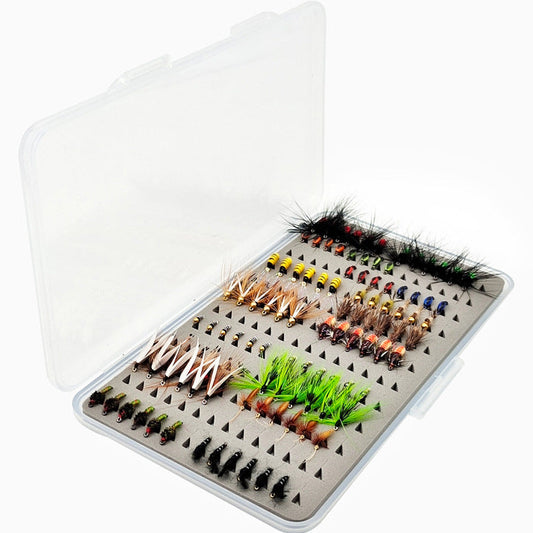
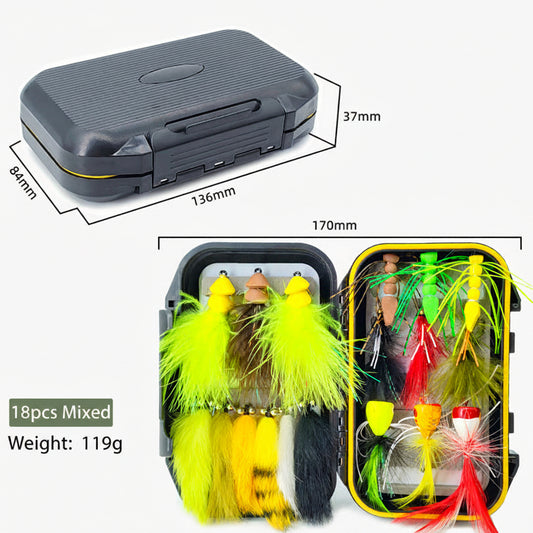
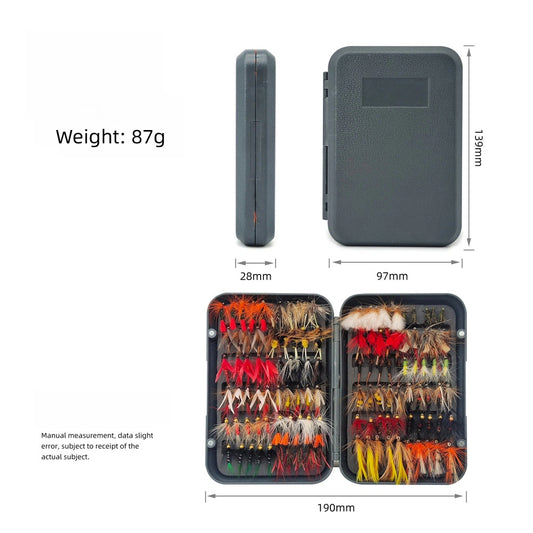
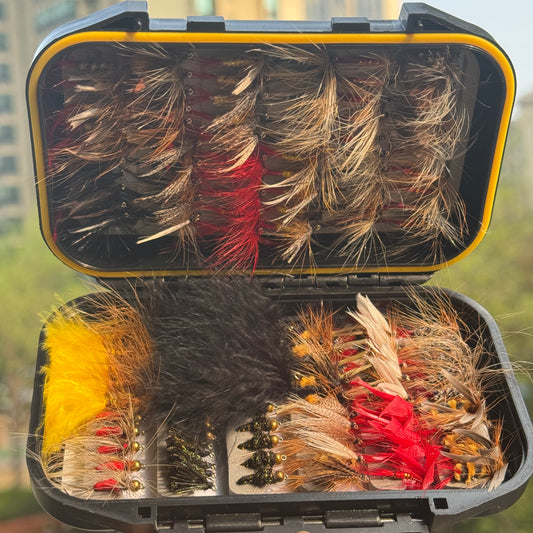
Beyond the Fly Box: Game-Changing Presentation Tips for Fly Fishing Success
If you want to catch more fish, there is one skill you absolutely must master: presenting your fly as naturally as possible. If your fly doesn't look and drift like the real thing, fish simply won't eat it.
Many anglers spend countless hours researching what fish are eating and meticulously selecting the perfect fly. But here is the hard truth: presentation is often far more important than the fly itself.
The essence of great presentation is making the fish believe your artificial fly is a real insect. To achieve this, you need to focus on two core concepts.
The Two Core Pillars of Perfect Presentation
1. Delivering to "The Strike Zone"
The strike zone is simply the specific depth in the water column where fish are actively feeding. It changes constantly depending on the season, the week, or even the day.
- Spring (Hatch Season): Fish are aggressively eating emerging nymphs and adults near the surface. The strike zone is the upper water column.
- Winter (Cold Temps): To conserve energy, fish crowd into the deepest, slowest parts of the pool. The strike zone is the bottom.
A perfect presentation ensures your fly is running exactly where the fish are looking.
2. Eliminating "Drag"
Drag is any unnatural, artificial movement of your fly. It sends a clear signal to the fish: "This is a fake."
Think of a natural insect drifting downstream—it has no self-awareness; it simply moves at the exact speed of the current. Whether it's an adult on the surface or a nymph underwater, it should be a slave to the flow.
If your fly creates drag (think of the unnatural wake left by a jet ski), even a perfectly matched fly will be rejected. The fish will turn away from it like a kid rejecting broccoli.
Three Practical Techniques for a Flawless Presentation
Technique 1: Choose the Right Rig
Your setup must match the scenario:
- Fish rising to the surface: Target the upper strike zone with a standard Dry Fly Rig or a Double Dry Fly Rig.
- Quiet surface, no hatching bugs: Fish are feeding on the bottom (where 90% of a fish's diet comes from). Use a Double Nymph Rig or a Streamer Rig.
- Late Summer (hoppers active on the banks): Use a Dry-Dropper Rig. The dry fly on the surface mimics a grasshopper, while the nymph underneath covers the subsurface strike zone.
Fine-Tuning Your Rig:
- The Dry Fly "Micro-Drag": If a fish comes up to inspect your fly but refuses it, you likely have invisible micro-drag. Downsize your fly or switch to a lighter tippet.
-
The Nymph "Trial and Error" Framework:
- Catching fish? You are in the strike zone.
- Never touching bottom? Adjust your indicator depth, add weight, or add split shot (in that order).
- Snagging bottom every cast? Do the exact opposite.
- Snagging bottom once every 4-5 casts (or at the end of the drift)? Perfect. You are exactly in the strike zone.
Technique 2: Positioning and Stealth
Trout have incredible eyesight, and they spend 99% of their time facing upstream. They are constantly scanning the water for fast-moving food and the sky for predators.
To avoid spooking them, follow these three rules:
- Stay low and approach from behind: Crouch, move slowly, and never let your shadow or profile break the sky in front of or above the fish.
- Make your first cast count: Fish are least wary of the very first presentation. The more you cast, the more likely you are to spook them.
- Search from near to far: If you try to bomb a long cast over nearby fish to reach distant ones, the splash will scare the close fish, which will then panic the rest of the pool.
Technique 3: The Art of Mending
Mending is the technique used to eliminate drag caused by conflicting currents. For example, if your fly is drifting in a slow current but your fly line lands in a fast current, the line will pull the fly unnaturally fast.
- How to do it: Lift your fly line off the water and move it upstream so it tracks at the same speed as your fly. Repeat as necessary.
- The Common Mistake: Beginners often just try to "flick" the line on the surface. Because of surface tension, the line sticks to the water like a suction cup, and the flick does nothing. The correct method is to smoothly lift a few feet of the line entirely off the water and reposition it upstream.
The Final Takeaway
Picking the perfect bug from your fly box is important, but without good presentation, it is entirely useless. By mastering rig selection, stealthy positioning, and proper line mending, you can consistently trick even the most highly educated trout.