Fly Fishing Mastery: Why Do Your Dry Flies Keep Sinking? Unveiling the Tactical Edge of High-Buoyancy Foam Mayfly Duns
Introduction: The Battle with Surface Tension
In the world of fly fishing, dry fly fishing is arguably the most elegant and visually rewarding method. You cast your meticulously tied imitation, watch it settle softly on the water, and drift through a perfect arc—until a trout rises, the surface breaks, and your line goes tight.
But for many anglers, there’s a familiar frustration: after two or three casts, your dry fly starts to absorb water and sink. Or worse, it drags across the surface, leaving a "V" wake that spooks every fish in sight.
What's going wrong? The answer lies in surface tension and buoyancy. Natural mayfly duns are evolutionarily designed to "stand" on the water film, thanks to their hydrophobic wings and bodies. To fool a selective trout, your imitation needs to achieve a near-cheating level of floatation, visibility, and realism.
Today, we’re going to break down a game-changing design—the High-Buoyancy Foam Mayfly Dun. How does it solve the sinking problem? And why has it become a must-have pattern during hatch season?
Part 1: The Three Culprits Behind Sinking Dry Flies
Before we dive into the solution, let's look at why traditional dry flies fail in the first place:
-
Material Absorption: Natural feathers and fur look realistic, but their microscopic scales absorb water over time, adding weight and eventually dragging the fly beneath the surface.
-
Unbalanced Center of Gravity: If the weight of the hook and hackle is unevenly distributed, the fly will land awkwardly, tipping over or nosediving instead of maintaining a stable, "water-walking" posture.
-
Lack of Buoyancy Reserve: In fast-moving pocket water or riffles, turbulence constantly pulls the fly downward. Traditional dry flies often lack the extra buoyancy needed to resist this physical drag.
Part 2: The "Physics Cheat Code" of Foam Mayfly Duns
1. The Unsinkable "Life Ring": High-Buoyancy Foam Post
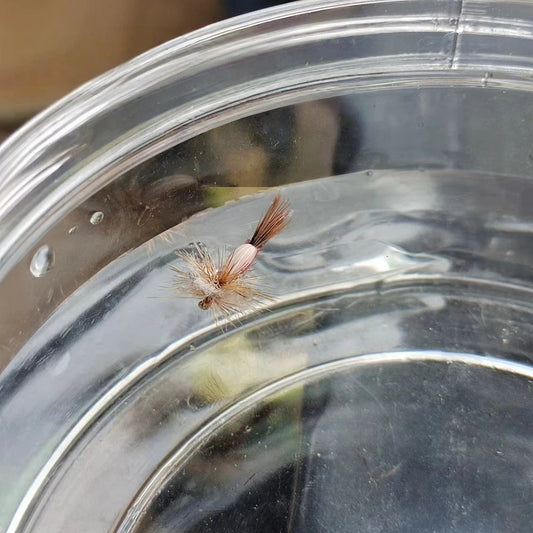
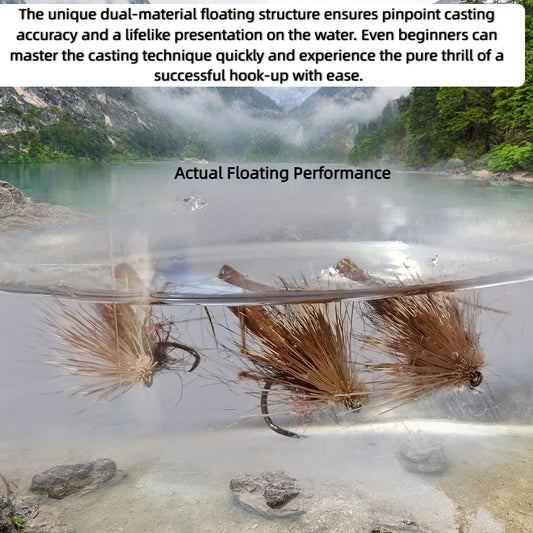
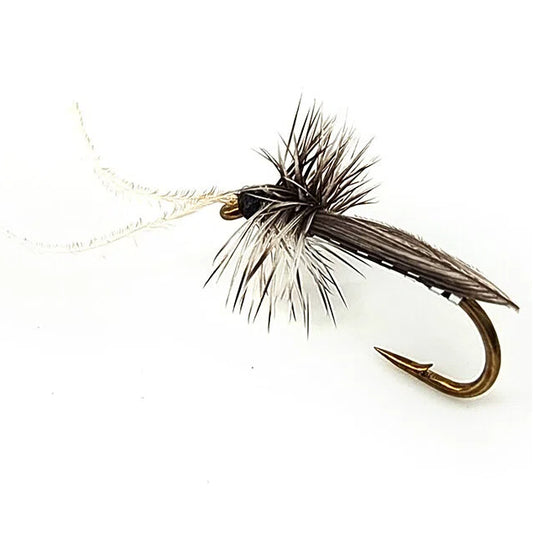
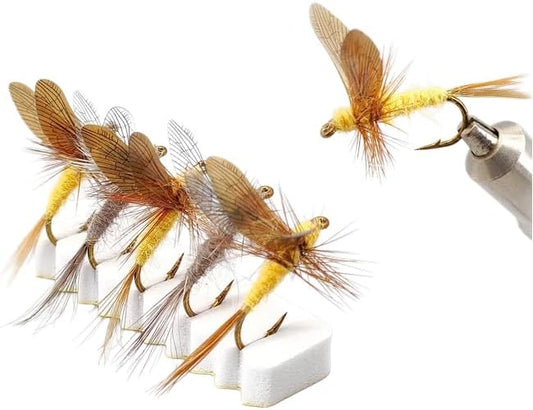
The core innovation of this #14 foam dun is a micro-foam ball tied at the head, serving as a "Foam Post." It functions like a permanent life ring for your fly. Closed-cell foam consists of isolated air chambers—water simply cannot penetrate it. This means:
-
No More Frequent Floatant Reapplication: This fly stays afloat all day long, even after catching multiple fish.
-
Exceptional Resistance to Turbulence: Even in the strongest "foam lines" and choppy currents, it maintains a head-up, natural stance without being dragged under.
2. A High-Visibility "Tracking Beacon"
In low-light conditions or on sparkling, broken water, it's nearly impossible to track a dark, traditional dry fly. But the white foam post on this fly serves a dual purpose: it’s also a high-visibility sighting aid. You can see exactly where your fly is drifting, detect subtle takes, and set the hook at the precise moment—no more missing that critical 0.5-second window.
3. The "Flash Abdomen" That Triggers Predatory Instincts
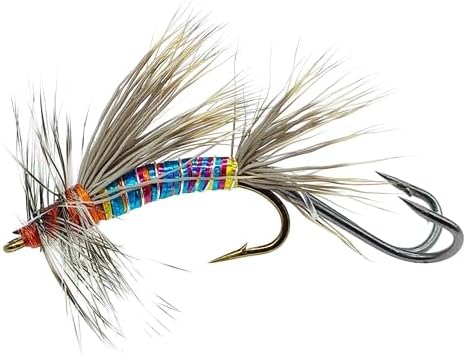
Real mayflies, during their emergence, trap a thin layer of air around their abdomen that creates a beautiful, iridescent shimmer under sunlight. Traditional hackle flies rarely replicate this optical effect. The foam dun solves this with its segmented, reflective tinsel abdomen.
This multi-layered tinsel wrap creates a subtle "micro-flash" as it moves through the current, perfectly mimicking the light-reflecting gas bubble of a natural insect. For trout in a "selective feeding" mode, this dynamic flash acts as a visual trigger, expanding your strike zone and enticing even the most pressured fish.
Part 3: A Tactical Advantage During Hatch Season
Hatch season is the most exciting—and most technical—time to be on the water. Trout key in on specific insects, and they become incredibly selective.
-
The Perfect Hook Size: The #14 hook is the "golden size" for imitating medium-sized mayflies (like Blue-Winged Olives or Hendricksons). It’s large enough to interest big browns, yet small enough to fool wary rainbows.
-
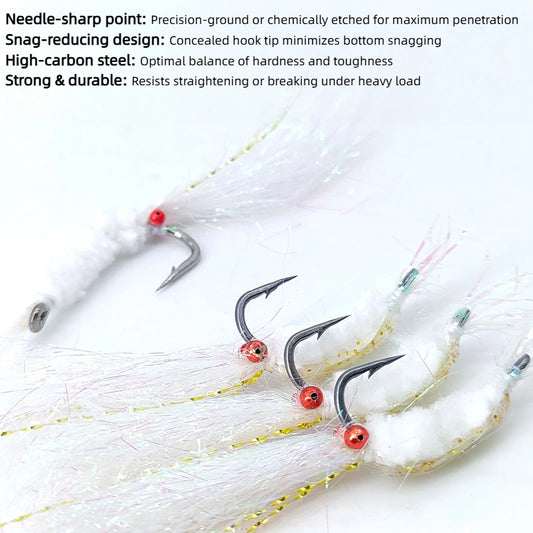
The Ethical and Practical Barbless Hook: This fly is tied on a forged, high-carbon steel barbless hook. In hatch season, you'll be hooking and releasing multiple fish. A barbless design makes hook removal lightning-fast and harmless, perfectly aligning with the modern ethos of catch-and-release. Plus, the needle-sharp point ensures instant penetration for a secure hookset.
Part 4: Pro Tips—How to Maximize the Foam Mayfly Dun
Having a great fly is only half the battle. Here’s how to use it effectively:
-
Rigging: Pair it with a 3–5 weight fly rod and a 5X or 6X tippet. Thinner tippets reduce surface disturbance, allowing for a more natural drift.
-
Drift Strategy (Dead Drift): When the fly lands, let it drift naturally with the current. Don't drag it. The key is to track the white foam post, not pull it. As it enters a slower glide, let the line go slightly slack—this is often when a cautious trout will finally commit.
-
Target Structure: Cast to the edges of seams, behind boulders, and along "foam lines" where currents converge. These are prime feeding stations and the exact places where the foam post's anti-turbulence design shines.
Conclusion: From a "Consumable" to a "Weapon"
For years, dry flies were thought of as consumables—you lose them to trees, or they sink after a few drifts. The high-buoyancy foam mayfly dun changes that mindset entirely. It isn't just an imitation; it's a tactical solution to three core problems: sinking, visibility, and attraction.
Next time you're on the river during a heavy hatch, watch your foam dun ride the riffles confidently, see that white post track perfectly through the drift, and feel the electric jolt of a large trout accepting your offering. That's the moment you'll understand why this design deserves a permanent spot in your fly box.
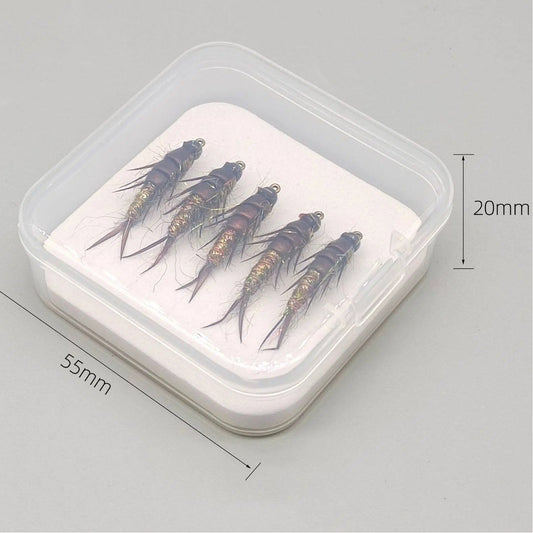
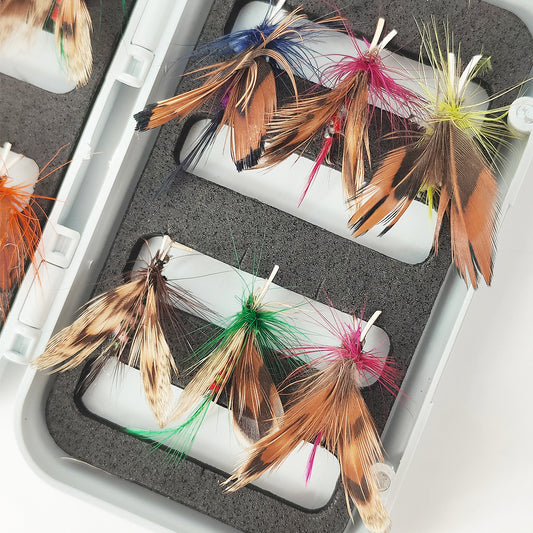
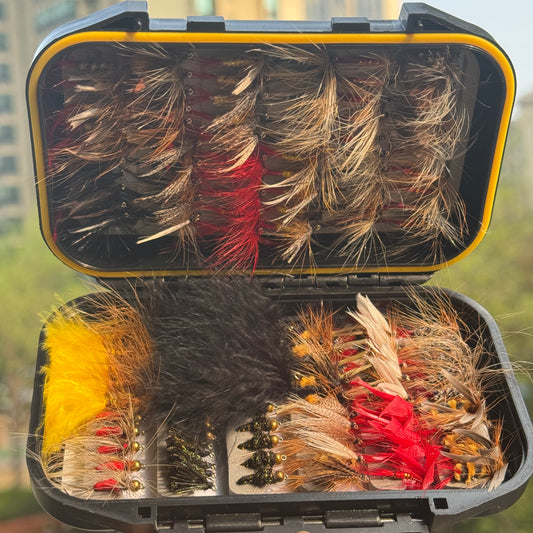
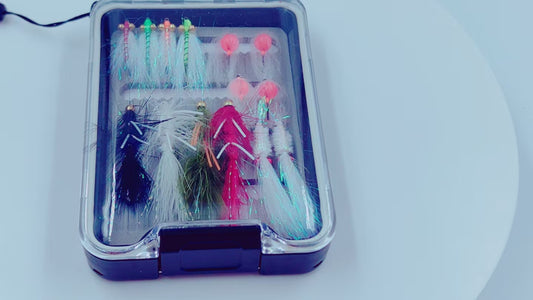
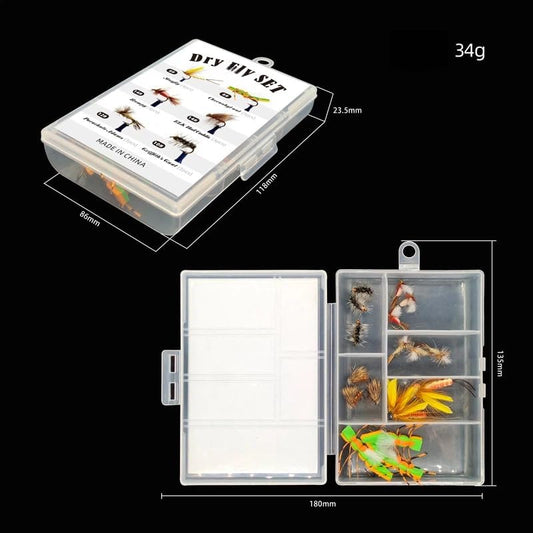
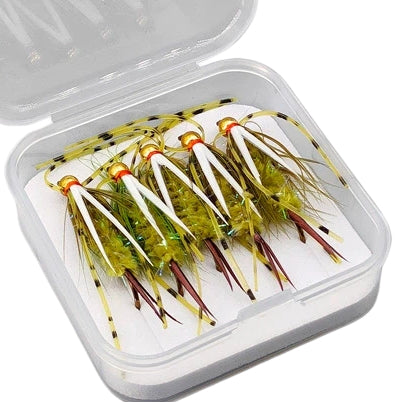
If you're ready to experience the confidence of a truly unsinkable dry fly this hatch season, consider the DzAngling 10-Pack #14 Barbless Floating Foam Mayfly Dun set. Hand-tied by professional tiers and packaged in a weather-resistant box, it's more than just a tool—it's a professional-grade asset for the discerning angler.
👉 [Click Here to Explore the Product Details and Upgrade Your Fly Box Today]