Mastering Caddis Nymphing: A Pro Guide to the LY008 Artificial Fly
When it comes to targeting wary freshwater species in rivers and streams, few presentations are as consistently effective as imitating the caddis fly life cycle. Building upon our technical breakdowns of fly tying and gear selection, today we take a deep dive into the LY008 Caddis Nymph—a masterpiece of modern bionic fly design.
Here is everything you need to know about its biological inspiration, operational mechanics, and professional fishing methods to elevate your success on the water.

1. Biological Inspiration & Simulation Modeling
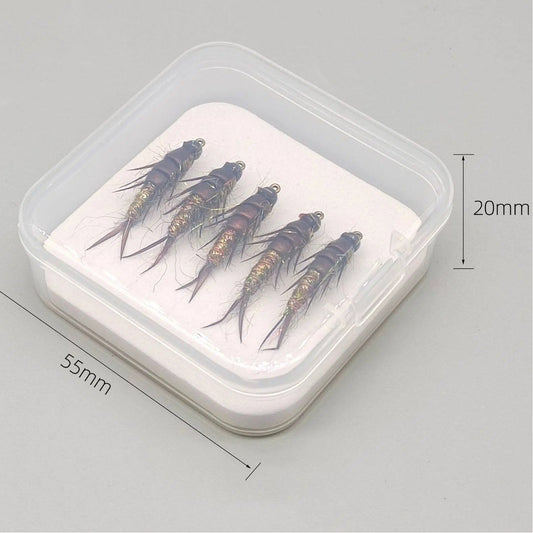
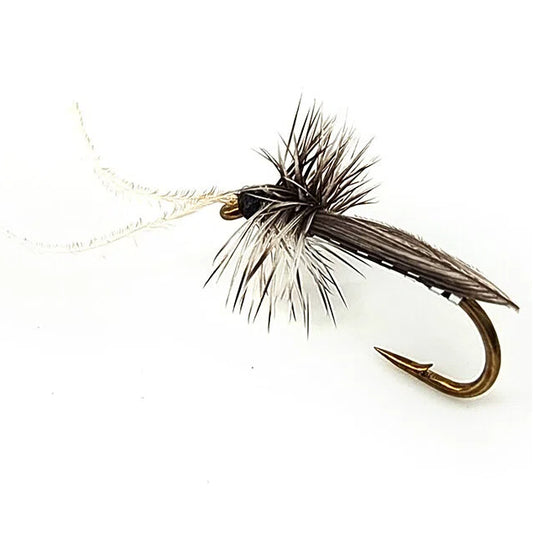
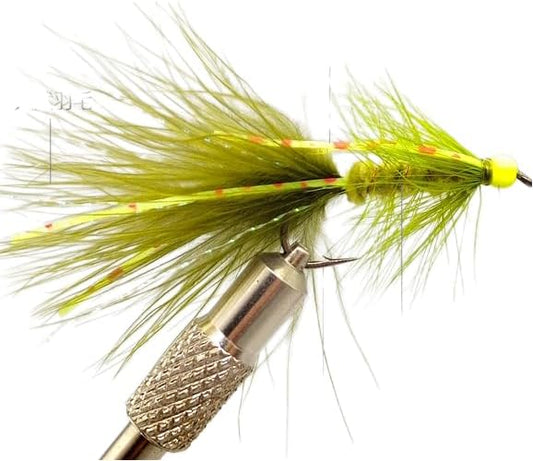
The LY008 is meticulously designed to mimic the Caddis Larva and Nymph stages.
- The Anatomy: Caddis larvae are famous for inhabiting rivers worldwide, often crawling along the streambed or drifting in the current.
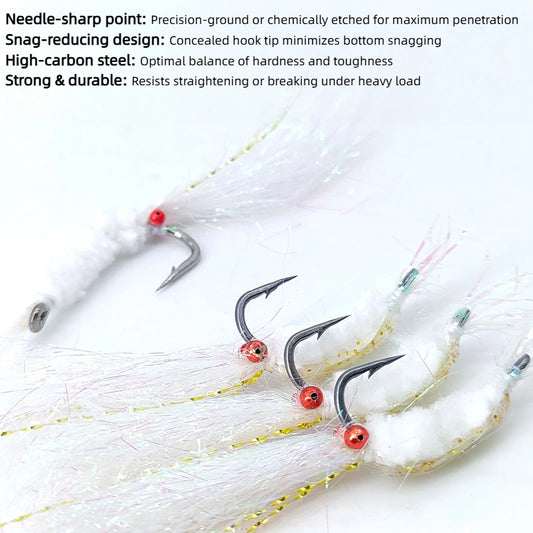
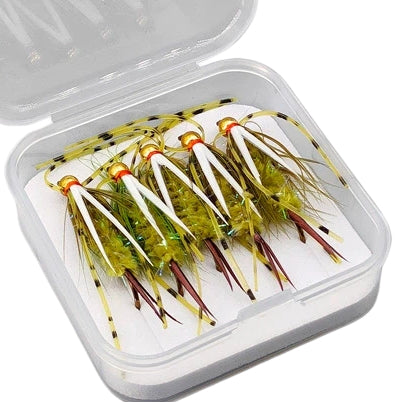
- Bionic Features: This pattern features a segmented soft silicone abdomen that accurately replicates the natural, fleshy texture and segmented look of a real insect. Combined with natural hackle for a lifelike swimming action and Flashabou tinsel that reflects light to simulate natural biological iridescence or trapped air bubbles, it instantly triggers predatory strikes.
2. Target Water Bodies & Environments
- Ideal Waters: This pattern excels in fast-flowing freshwater streams, rocky rivers, and clear alpine creeks where trout, grayling, chub, barbel, and perch feed heavily on benthic organisms.
- Habitat Zones: Because caddis larvae live underwater—often attached to rocks or drifting near the bottom—this fly is built to target the lower and middle water columns, as well as riffles, runs, and pocket water where natural nymphs are dislodged by the current.
3. Weighting & Sinking Characteristics
- Sub-Surface Presentation: The LY008 is strictly a wet fly / nymph designed to fish beneath the surface.
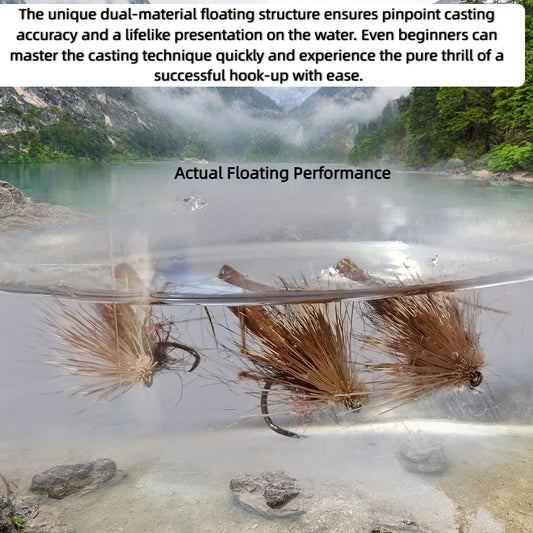
- Ballast and Sink Rate: Depending on the specific tying variant and bead-head or internal weighting used, it is engineered to quickly pierce the surface tension and sink into the strike zone. The lack of a bulky wind-resistant profile allows it to drop naturally into the feeding lanes where fish are actively looking upward for drifting food.
4. Professional Fishing Methods & How to Operate
To get the most out of the LY008 Caddis Nymph, anglers typically employ specific nymphing techniques rather than standard surface presentations:
-
European Nymphing (Euro Nymphing / Tight-Line Nymphing):
- How to fish: Cast upstream or across-and-up, holding your rod tip high to keep the fly line off the water. Allow the LY008 to bounce naturally along the gravel streambed mimicking a dislodged larva. Watch your leader or indicator for the slightest hesitation or sudden stop, which signals a strike.
-
Indicator Nymphing:
- How to fish: Suspend the nymph under a lightweight strike indicator at a depth matching the water column (usually 1.5 times the depth of the water). Mend your line to ensure a dead-drift presentation as the fly rolls naturally with the current.
-
Swing Presentation:
- How to fish: Cast across the stream, let the fly sink, and allow the current to swing the fly in an arc downstream. As the fly rises toward the end of the swing (imitating an emerging pupa ascending to the surface), expect aggressive reaction strikes.
5. Hook Performance: Designed for Conservation
- Barbless Advantage: The LY008 utilizes an elongated, tapered barbless hook point.
- The Benefit: A barbless hook penetrates faster and deeper due to reduced resistance. More importantly, it dramatically minimizes tissue damage, making unhooking quick and safe—perfect for catch-and-release anglers practicing sustainable conservation.