The Fly Fisher's Guide to Choosing the Right Fly: Understanding the ABCs
A Complete Beginner-Friendly Breakdown of What Flies Are, What They Imitate, and Which Ones You Actually Need
If you've ever stood knee-deep in a river, staring at your fly box, you've asked yourself the exact same question every angler asks on every single outing:
"What fly should I use today?"
On the surface, it seems like a simple question. But the moment you walk into a fly shop or browse online, you're confronted with thousands upon thousands of fly patterns, accompanied by a dizzying vocabulary that feels like a foreign language — mayflies, midges, caddis, stoneflies, scuds, sculpins. For a beginner, it can quickly go from curiosity to overwhelm.
The goal of this article is straightforward: we're going to clear up the confusion — what flies are, what they imitate, and which patterns you absolutely, 100% need in your box to feel confident on the water and start catching fish.

The ABCs of Fly Fishing Flies
Before we talk about specific patterns, we need to build a foundation. We call this the ABCs of fly selection. Once you have this framework, everything else starts to fall into place.
A — Bug Types & Food Sources
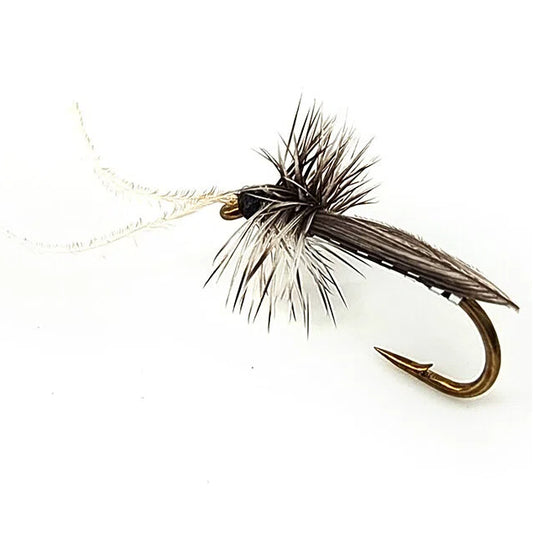
In fly fishing, we're imitating naturally occurring food sources with an artificial fly. These flies are hand-tied using feathers, hair, foam, and other natural or synthetic materials. They have no scent, no taste — this isn't scented power bait or a wiggling worm that attracts fish from a mile away. Our only tool is deception.
So as fly anglers, our job on the river is simple in theory:
-
Identify a food source.
-
Tie on a fly that looks like it.
-
Make it act like it.
-
Trick a hungry fish into biting.
So what do fish eat? While this article focuses mainly on trout, the same principles apply to virtually any species you chase.
The majority of a trout's diet consists of aquatic insects, with four main types:
-
Mayflies
-
Caddisflies
-
Stoneflies
-
Midge
We could spend hours diving deep into entomology (and in fact, we'll have a full masterclass on bugs and fly selection in the future), but here's the big picture: regardless of species, these insects share a similar life cycle. They start their lives at the bottom of the river, then at some point, they move toward the surface, hatch into adults, mate, lay eggs, and die — continuing the circle of life. When an experienced angler says "there's a hatch going on," this is exactly what they mean.
But aquatic insects aren't the only food source. Trout also eat:
-
Terrestrials — bugs like grasshoppers, beetles, and ants that live on land but end up in the water.
-
Freshwater crustaceans — such as scuds and sowbugs.
-
Other prey — smaller fish, crayfish, leeches, and more.
B — Fly Types
Now that we're familiar with the menu, let's talk about the tools. If we go back to those food sources, you'll notice some live below the surface, some are near the surface, and some ride on top of the water.
To cover all these zones, we have four main fly types:
| Zone | Fly Type | Purpose |
|---|---|---|
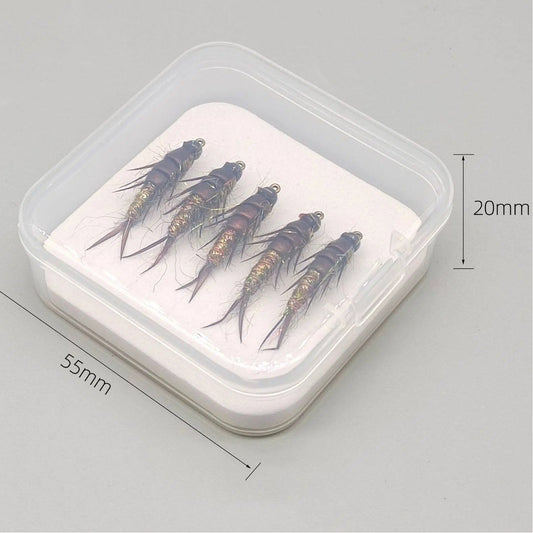
| Below the surface | Nymphs | Imitate bugs in their larval or nymphal stages (the "babies"). Many feature tungsten or brass beads and heavy wire to sink fast and get down where the fish are. |
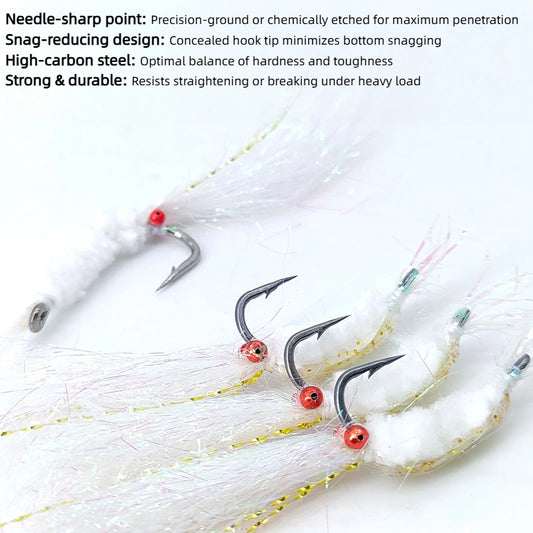
| Below the surface | Streamers | Imitate bigger meals — other fish, leeches, crayfish. Great for targeting larger predators. |
| Near the surface | Emergers | Imitate bugs that are traveling up through the water column or trapped in the surface film during hatching. |
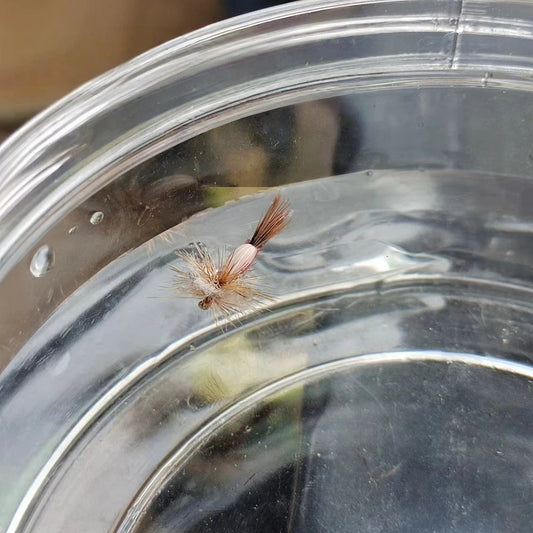
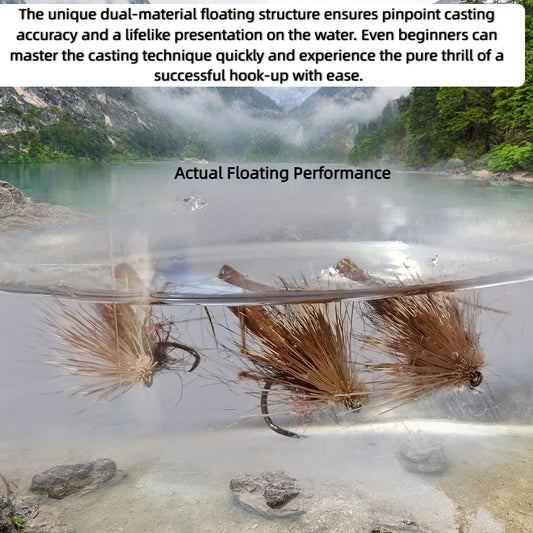
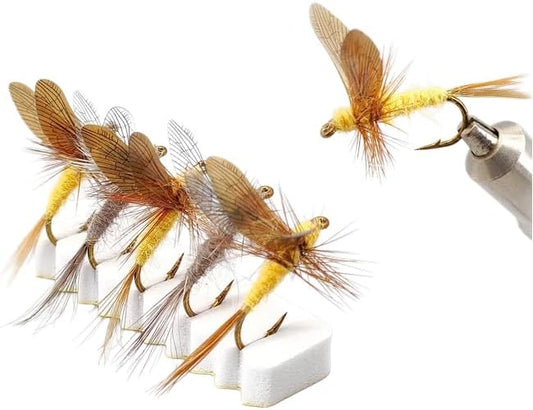
| On the surface | Dry Flies | Imitate adult aquatic insects or terrestrials that are floating along on top of the water. |
C — Environment & Conditions
One of the things that makes fly fishing both fun and challenging is that conditions are constantly changing — river levels, bug activity, fish behavior. Just because you were slaying them last week on a certain fly doesn't mean that same fly will work this week.
So how do we decide which of the four fly types to tie on?
When to fish Nymphs
Since the majority of a trout's diet comes from below the surface, there's never really a bad time to fish a nymph. They're especially effective when:
-
You don't see much happening on the surface (no bugs, no rising fish).
-
You're fishing deeper water.
-
It's colder time of the year.
Bottom line: when in doubt, tie on a nymph.
When to fish Streamers
Fish are always on the prowl for bigger protein sources, so streamers are also a solid choice most of the time. They shine in specific conditions:
-
When you're targeting big fish.
-
In low light, murky water, high water, or colder water conditions.
When to fish Dry Flies & Emergers
These fly types work best when bugs are actively hatching or falling into the water — typically during spring and summer when bug activity peaks.
But how do you choose between a dry fly and an emerger? This is where rise forms come into play.
-
Fish eating emergers (just below or trapped in the surface film) will often break the surface with only their fins or tails — subtle, gentle sipping.
-
Fish eating adult dry flies (floating on top) will often break the surface with their noses, sometimes even launching themselves slightly out of the water — more splashy, aggressive takes.
A quick note: this is a slightly more advanced tactic for picky fish. If you're out during warmer months with bugs flying around, chances are most fish won't turn their nose up at a well-presented dry fly.
Time-Tested Patterns You Can Count On
Now that we've covered the ABCs, let's talk about specific patterns. The following are classic, proven patterns that will get the job done — whether you're fishing eastern rivers, western rivers, or anywhere in between, for trout.
Nymphs
-
Zebra Midge
-
Frenchie
-
Hare's Ear
-
Prince Nymph
-
Pheasant Tail
-
Rubber Legs
-
Copper John
-
San Juan Worm
Dry Flies & Emergers
-
Parachute Adams
-
Blue-Winged Olive
-
PMD Sparkle Dun
-
Elk Hair Caddis
-
Griffith's Gnat
-
Chubby Chernobyl
-
Stimulator
Streamers
-
Woolly Bugger (in multiple colors)
-
Thin Mint
-
Autumn Splendor
-
Leech
-
Clouser Minnow
-
Crystal Bugger
-
Slump Buster
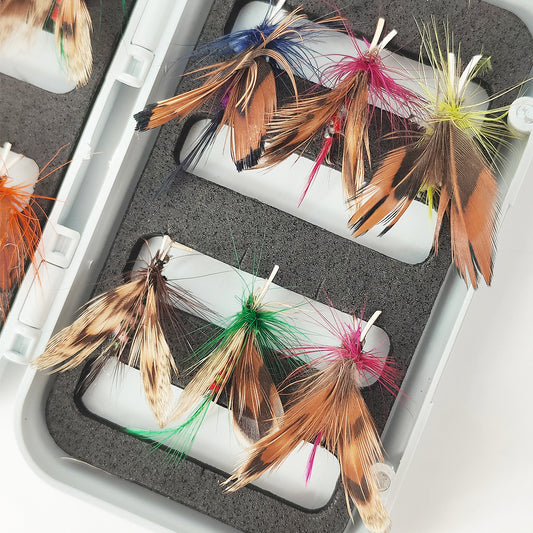
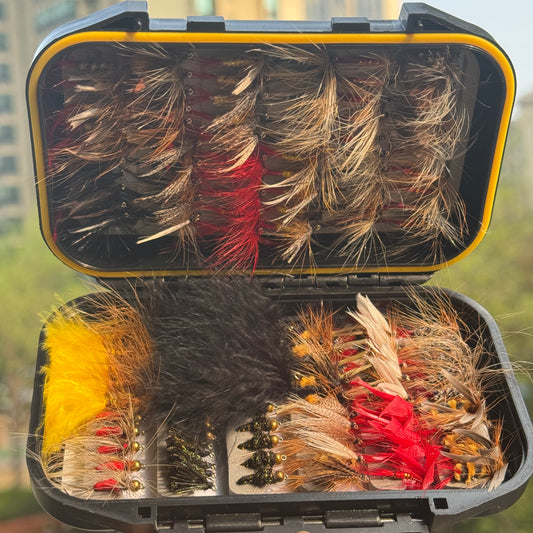
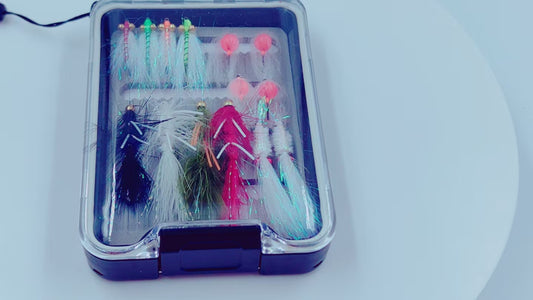
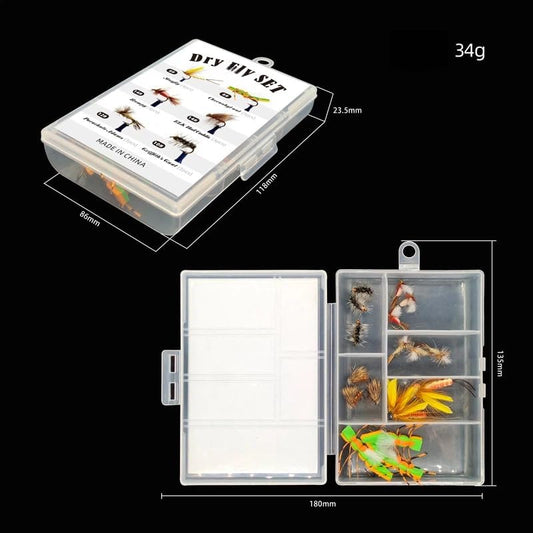
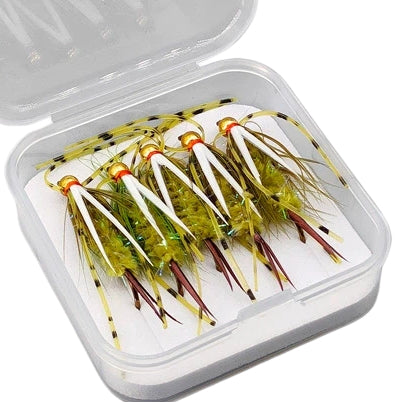
To make things even easier, we've put together curated fly collections that cover all the major bug types, food sources, and fly types. Our hope is that you can spend less time worrying about whether you have the right flies, and more time out on the water figuring out which one the fish actually want to eat.
Is There a Formula for Picking the Right Fly Every Time?
By now, you've got a solid understanding of what flies imitate and the different types available. But you might still be wondering:
"Is there some kind of system — a way to analyze my surroundings and figure out exactly which fly to use, every single time I go to the river?"
The answer is yes. And that's exactly what we'll cover in our next installment — a step-by-step approach to reading the river, observing insect activity, and making confident, informed decisions on the water.
Final Thoughts
Fly selection doesn't have to be overwhelming. It starts with understanding the ABCs:
-
A — What do the fish eat?
-
B — Which fly type matches that food source?
-
C — What are the current environmental conditions telling you?
With those three pillars in place, and a handful of classic patterns in your box, you'll walk to the river with far more confidence — and start catching more fish.
The river is always changing, and that's what makes this sport so endlessly fascinating. Get out there, observe, experiment, and enjoy the process.